Most writing on this question comes from people who sell websites, and that applies to this post as well, so it is worth stating before anything else.
The starting position: a social page is sufficient for some businesses, an active social page is more useful than a neglected website, and many businesses have run for years on nothing else.
There are three specific things a feed cannot do, and they are the same three in each case. Knowing what they are is more useful than a recommendation, because it makes it possible to work out which case a particular business is in.
When a social page is sufficient
There is a recognisable profile here, and a business that matches it has little to gain from the rest of this post.
Trade comes largely from one platform's local audience. The offer is simple enough to explain in a caption. The page is posted to often enough to look current. And customers arrive by recommendation or proximity rather than by searching for what is sold.
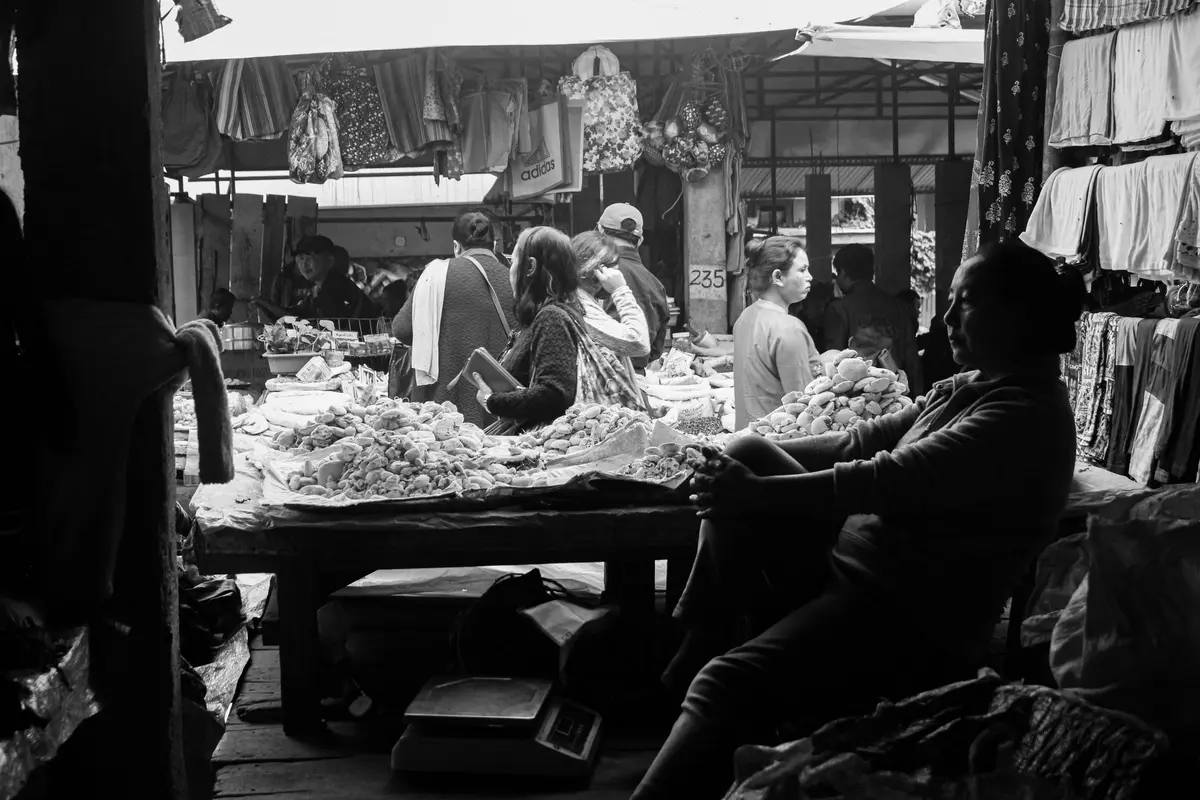
A market stall, a mobile business with a following, a maker who sells what they photograph — for these the feed is the appropriate venue rather than a compromise. The content is close to the product, and the audience is already there.
The three things a feed cannot do
These are the reasons businesses commonly end up with both. Each follows from what a feed is, rather than from how well the account is run.
1. Being found for what is sold
Somebody searching for a specific dish, job or treatment in a town is looking at search results, where a social page competes less effectively. A feed is ordered by recency; a search is ordered by relevance.
That is the difference between customers who already know the business exists and customers who do not. A feed serves the first group well and the second group much less so, and the second group is how a business reaches beyond the people already in touch with it.
2. Owning the audience and the rules
Reach, layout, what is shown to whom, and whether a link is permitted are decided by the platform and change without notice. A business built entirely on one platform depends on those decisions.
The sharpest version: if an account is suspended in error, the business's entire web presence is unavailable until an appeal is resolved, and the appeal is generally a form rather than a phone number.
3. Holding structured information
A price list, opening hours that change, a treatment menu with durations, a booking that knows the capacity — a feed carries none of these well, because it is a stream of posts and each of those is a table.
The usual workaround is to post the price list as an image, which then requires answering questions about whether it is current for as long as it stays up. For many businesses that is the largest recurring time cost of running on social alone.
How to tell which case applies
Four questions rather than a recommendation. Two or more yes answers suggest a site would be doing work a feed cannot.
- 1.Do people search for what is sold rather than for the business by name? "Emergency plumber Leeds", "dog groomer near me", "brisket" — if those describe the customers, a feed reaches few of them.
- 2.Are the same questions answered in messages every week? Those questions describe a page that does not exist yet.
- 3.Is there a price list, a menu, a timetable or a treatment list? That is structured information, which a feed does not hold well.
- 4.Do people need to book a specific time? A message thread cannot refuse a slot that has already gone.
The common outcome is both
Most small businesses end up running both, with a fairly clear division of labour.
The social page serves people who already follow the business: what is on today, what came out of the oven, a finished job. That is a relationship with an existing audience, and a feed does it well.
The website serves people searching for what the business does who have not heard of it, and it holds the structured material — prices, hours, bookings — so that both audiences have one authoritative place to be sent to.
The site is not a replacement for the feed. It exists for the search, and it holds the facts the feed otherwise has to repeat.
Three common reasons for not having one
Most businesses that stay on social alone give one of three reasons. Two of them were stronger than they are now.
"It's too expensive"
This held when a small business site meant an agency quote. The comparison worth making now is not against zero, but against the hours a month currently spent answering the same questions in messages.
"I don't have time to maintain it"
This one is well founded, and it is the reason neglected websites exist. One response is to build something small: the facts that rarely change, the prices, the hours, one way to make contact. Five sections that are accurate are more useful than twenty pages that are out of date.
The things that change constantly — what is on today, the latest work — are what a feed handles well, and can be left there.
"I'm not technical"
This is less of a barrier than it was, and the part that was never technical — deciding what customers need to know — is the part that determines whether the site is useful.
That part is generally known better by the business than by anyone building the site for it.
The bottom line
Where customers already know the business exists and the offer fits in a caption, a social page is sufficient, and an active one is more useful than a neglected site.
The three things a feed cannot do are being found for what is sold, owning the audience, and holding structured information — prices, hours, timetables, bookings. Where two of those matter, their absence is already being paid for, mostly in time.
The common endpoint is both, with a division of labour: the feed for people who already follow, the site for people searching for what the business does.
Frequently asked questions
- Is a social page really enough for some businesses?
- For some, yes. Where trade comes from one platform's local audience, the offer is simple, and the page is posted to often enough to look current, the feed is the appropriate venue rather than a compromise. An active social page is also more useful than a neglected website.
- What is the main thing a business loses without a website?
- Reach to people who do not already know it exists. A feed is ordered by recency and a search by relevance, so somebody searching for what the business sells is looking somewhere the page competes less effectively.
- Can't I post my price list as an image?
- That is the usual workaround. The cost comes later: the image goes out of date, its text cannot be searched, and questions about whether it is current continue to arrive in messages for as long as it stays up.
- What if I don't have time to maintain a website?
- A small one is a reasonable answer: the facts that rarely change — what the business does, prices, hours, how to get in touch — with the feed carrying whatever changes daily. Five accurate sections are more useful than twenty stale pages.
- Should I stop posting on social if I get a website?
- They do different jobs. A feed maintains a relationship with people who already follow the business; a site reaches people searching for what it does and holds the structured information a feed does not carry well.
- What happens if my social account gets suspended?
- The business's web presence is unavailable until the appeal is resolved, and appeals are usually handled through a form rather than by phone. That is the practical argument for owning something as well, independent of any marketing case.