Website builder
Website builder for plumbers
What you do, where you cover, and a quote request — on a page that loads on a phone in a wet basement.
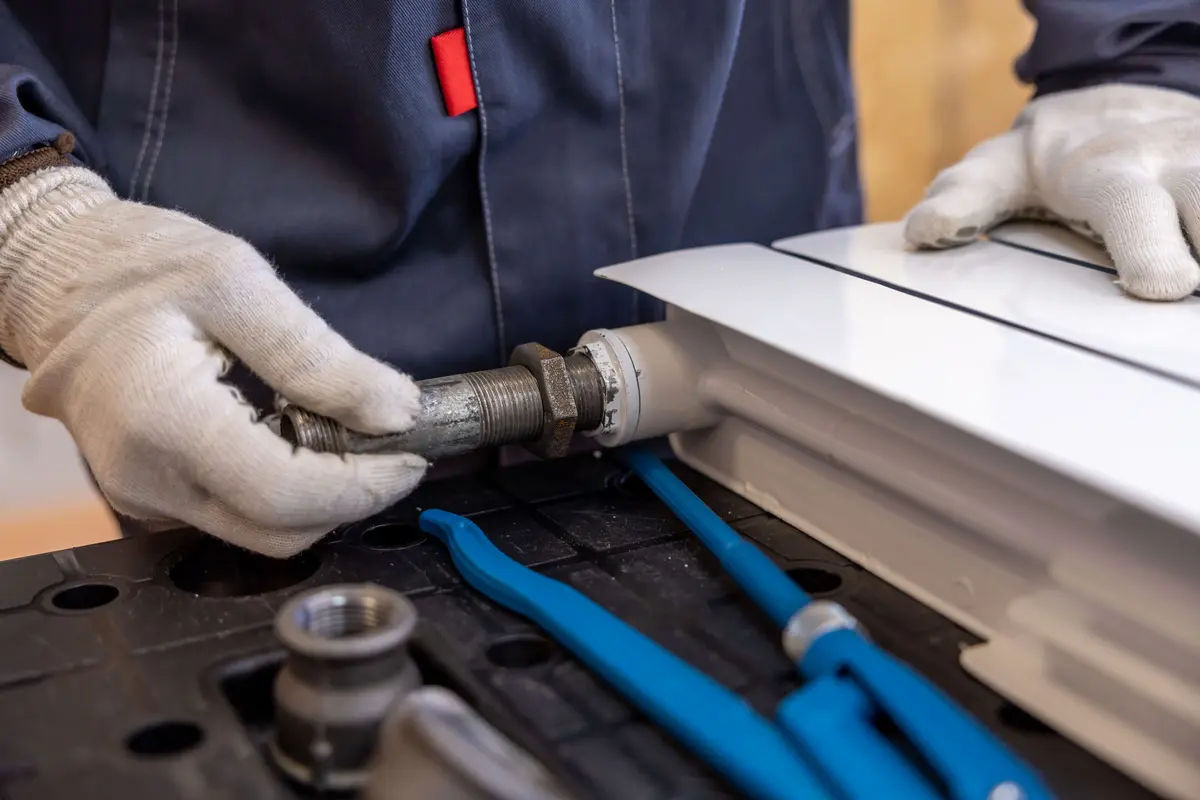
A plumbing site gets found in an emergency, on a phone, by someone who is not going to read anything. The call button, the area you cover and whether you're available now are the entire page.
Describe the business and that is what gets built first, with the jobs you do and the accreditations you hold underneath — and the quote form arrives as an email and as a record so nothing is lost in a busy week.
What they came for
What people want from a plumbing business website
Four questions a visitor arrives with. Everything below is what the generated page does about them.
Do you cover my postcode?
The fastest disqualifier there is, and the thing most trade sites mention last. The coverage area is said plainly near the top of the page.
Can you come out today?
Whether you take emergency callouts, and the hours you take them in, sit in the short-facts section — with a phone number that dials when it's tapped.
Do you do this kind of job?
"Domestic and commercial" is broad enough to answer very little. The services list is real rows — boiler swaps, bathroom installs, leaks — so someone can find the words for their own problem.
Are you actually registered?
Gas Safe, insurance, trade bodies. The accreditations section is for the ones you hold, and nothing is invented to fill the space.
Common problems
What tends to go wrong on plumbing business websites
Three patterns that come up often. None of them is a design problem, and each is a sentence or two of work to fix.
The phone number is an image
A number set as a graphic can't be tapped to dial or read by a screen reader, and much of the traffic on a trade site is on a phone.
No coverage area anywhere on the site
Without the area on the page, callers outside it get in touch and callers inside it can't tell you're local. Two lines of postcodes settle both.
"Domestic and commercial plumbing services"
It is a broad phrase, and it matches few of the searches people actually type. A list of jobs — boiler swaps, leaks, bathroom installs — uses the words a customer would use.
What gets built
What a plumbing business website needs
The sections Sitemo plans for plumbers, in the order it puts them on the page.
The opening screen
The first screen: a photograph of the real place, the name, and the one thing you want a visitor to do next.
The facts people decide on
The handful of facts a visitor decides on — walk-ins welcome, open Sundays, free parking, fully insured.
Services
What you sell, with prices. A list when there are many, cards with photographs when there are a few.
Your story
The short version of why the place exists, in your voice rather than a company profile.
Gallery
The work, the room, the finished job. Laid out as a set, so one good photograph isn't carrying the whole page.
The ask
The line that asks for the call, the booking or the visit.
Testimonials
Room for the reviews you already have. Your words from your customers — nothing invented to fill the space.
FAQ
The questions you answer on the phone all day, answered once on the page.
Contact form
An enquiry that reaches you as an email and is kept as a record you can open later.
Not a fixed list. Sitemo decides which of these your site actually needs from what you describe — a plumbing business with four things to sell gets a different page from one with forty.
Underneath the page
And the parts that aren't pages
Most plumbers need somewhere to keep this. It comes with the site rather than being a plugin you go and find.
Each one is a table you edit in your dashboard — change a price, add a service, take something off the list — and the published site follows. Enquiries arrive as an email and are kept as records you can search later, so nothing is lost because an inbox was busy.
The words
The same line, written twice
A general version of a line and a specific one, both about the same length. The difference is how much a visitor can do with it.
General
“Reliable, professional plumbing services you can trust.”
Specific
“Gas Safe registered, covering LS6 to LS17, emergency callouts until 10pm.”
Trust is asserted; a registration, an area and an hour can be checked.
General
“Free no-obligation quotes.”
Specific
“We quote a bathroom in one visit, in writing, usually the same day.”
Most quotes are free. What varies is when it arrives and in what form.
The prices and areas above are made-up examples; what is being shown is the shape of the sentence. Yours go in the box below, and the site is written from them.
Try it
Describe your plumbing business
This is the same box that's on the home page, filled in with the example above. Change it to yours.
Free to try · No credit card · Your site stays exportable
Questions
Websites for plumbers
- Can I show the areas I cover?
- Yes — the coverage area gets said plainly near the top, because it is the first thing that disqualifies a caller and the last thing most trade sites mention.
- Can I show my accreditations?
- Yes. Gas Safe, NICEIC, trade body memberships and insurance get their own section — the real ones you hold. Nothing is invented to fill it.
- How do quote requests reach me?
- As an email, immediately, and as a record kept in your dashboard. The form asks for the job, the address and a phone number — enough to call back, not so much that people give up filling it in.
- Will it load on a bad phone signal?
- That is the case it is built for. Publishing compiles the site to static files on a CDN with the images sized for a phone, so there is no app booting up before someone can read your number.
- Can the phone number be tappable?
- Yes — a phone number on the page dials when it's tapped, which for an emergency trade is most of what the site is for.
- Can I add a page for one service?
- Yes. Ask in chat for a page about boiler installations and it is created with real content, with the navigation and footer links updated across the site — useful when one job is worth more than the rest.
Where this isn't the right tool
This does not dispatch jobs, hold a diary of engineers or raise invoices. If you are running a team of six, keep your job-management software. Sitemo builds the page that makes the phone ring and keeps every quote request as a record you can search.